Tattoo & Pigment
Laser tattoo removal machines all do the same job — shatter dermal pigment into fragments the body can clear — and disagree on how. The Q-switched platform uses nanosecond pulses and up to 2,500 mJ of energy. The picosecond platform uses pulses a thousand times shorter that fracture pigment mechanically rather than by heating it, capped at 800 mJ. The Q-Switch Long Pulse Nd:YAG adds a long-pulse mode so one console covers tattoos, dermal pigment, vascular lesions and hair reduction. They are bought by tattoo removal studios, dermatology and cosmetic clinics, and med spas adding pigment work to an existing laser room. Every platform is quoted in writing — specification sheet, lead time, freight and total landed cost — with clearance documentation supplied with the quote. We do not publish session counts, because no honest supplier can quote one from a specification sheet. Tell us the caseload you actually see and we will tell you which of these fits it.
Regulatory clearance is granted per device model, not per company. Every platform's status is stated on its own page and confirmed in writing before purchase. See how clearance works.
The platforms
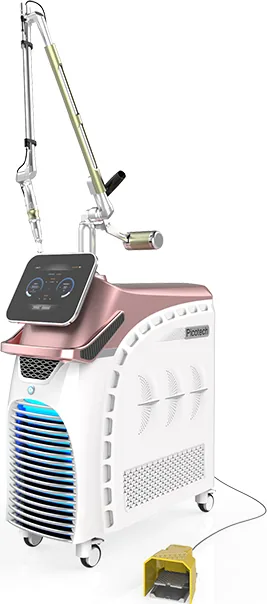
Picosecond pulses — fewer sessions, less thermal load.
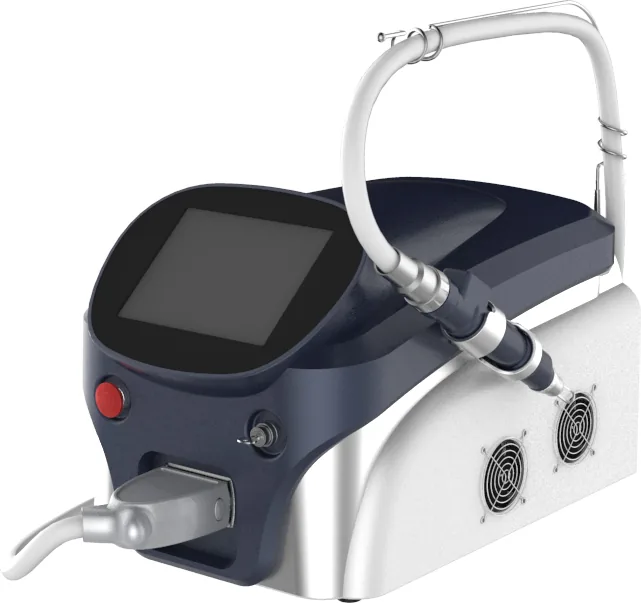
Nanosecond Nd:YAG with single and double pulse modes.
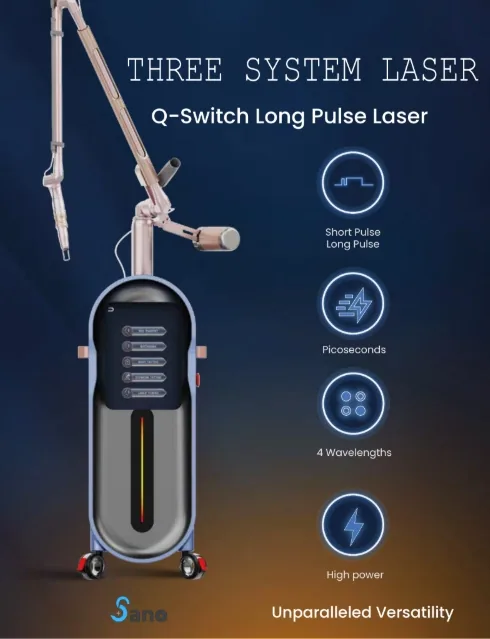
Two pulse modes, two wavelengths — five services from one console.
How to choose
Higher energy or shorter pulse — that is the whole trade, and it is not a ranking. These are the conditions under which each one is the right purchase.
Read the full comparison: Picosecond vs Q-switched Nd:YAG for tattoo removal →
Questions
Questions about buying, quotes, warranty and lead times are answered on the full FAQ.
Neither replaces the other. The picosecond platform uses 500 to 800 picosecond pulses that fracture pigment mechanically rather than by heating it, and is positioned as clearing difficult ink in fewer sessions across a wider range of skin tones. The Q-switched platform delivers up to 2,500 mJ per nanosecond pulse — more than three times the picosecond platform's 800 mJ maximum. Which matters depends on the caseload you actually see.
USBioLongevity does not publish session counts, and no honest supplier can quote one from a specification sheet. Session count depends on ink colour, ink depth, the age of the tattoo, patient factors and the protocol the treating practitioner chooses. The picosecond platform is positioned as clearing difficult ink in fewer sessions than nanosecond pulses — that is a statement about pulse physics, not a number we will put in writing.
The Q-switched tattoo platform's published description covers blue, black, red, yellow, green and brown ink, plus cosmetic lip and brow work. The picosecond platform runs 1064nm and 532nm as standard, with 650nm and 585nm treatment heads available as options — wavelengths added for colours that resist the standard pair. Confirm the exact configuration being quoted before assuming a colour is covered.
Also useful
Laser tattoo removal machines
Specification sheet, clearance documentation, lead time, freight and total landed cost — nothing buried.
 USBio
USBio